Posting Without a Path?
Most coaches do not need to post more.
They need somewhere clear to send people.
That is the part many coaches miss.
They show up on LinkedIn.
They share lessons.
They write thoughtful posts.
They get views, likes, comments, and profile visits.
But the enquiries still do not come consistently.
So they assume the problem is the content.
The hook was not strong enough.
The topic was wrong.
The algorithm did not push it.
The audience is not ready.
Sometimes that may be true.
But often, the real problem is much simpler.
The content is creating attention, but there is no clear path turning that attention into action.
That is what posting without a path looks like.
It keeps you visible.
But it does not reliably move people toward a conversation.
Why Posting More Is Not the Same as Getting Clients
Views are useful.
Comments are useful.
Profile visits are useful.
But none of them are the same as a real client enquiry.
A post can perform well and still do very little for your business.
Someone may read it and think:
“That was helpful.”
Then they scroll away.
No click.
No profile check.
No website visit.
No booking.
No conversation.
That does not mean the post failed completely.
It means the post had nowhere clear to take them.
This is why posting more often does not always fix the problem.
If the path after the post is unclear, more content only creates more loose attention.
It does not create movement.
The Real Problem Is Usually the Path After the Post
Think about what happens after someone sees your content.
They may click your profile.
They may read your headline.
They may check your About section.
They may visit your website.
They may look for your offer.
They may try to understand if you can help them.
Every step either builds trust or creates doubt.
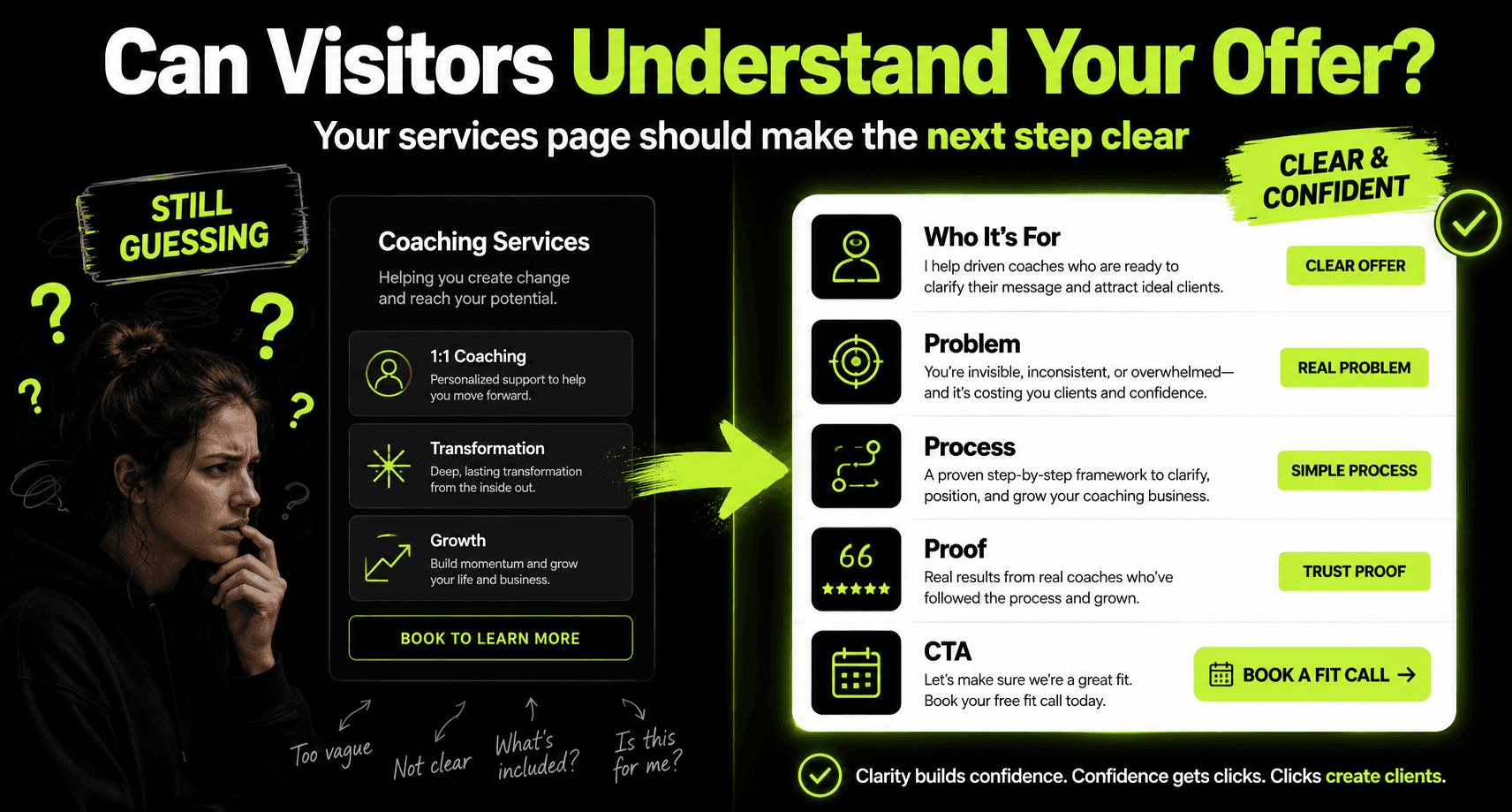
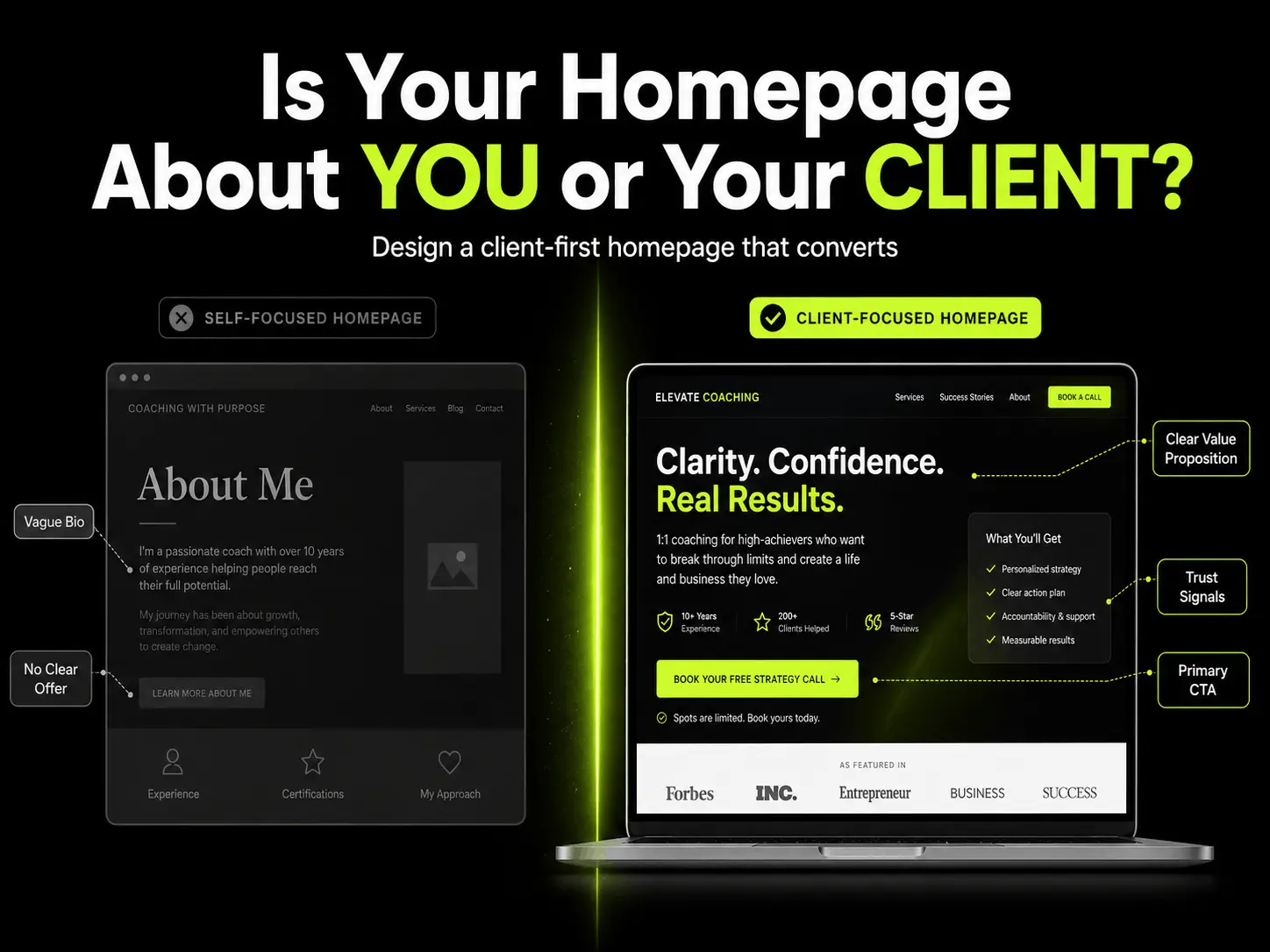
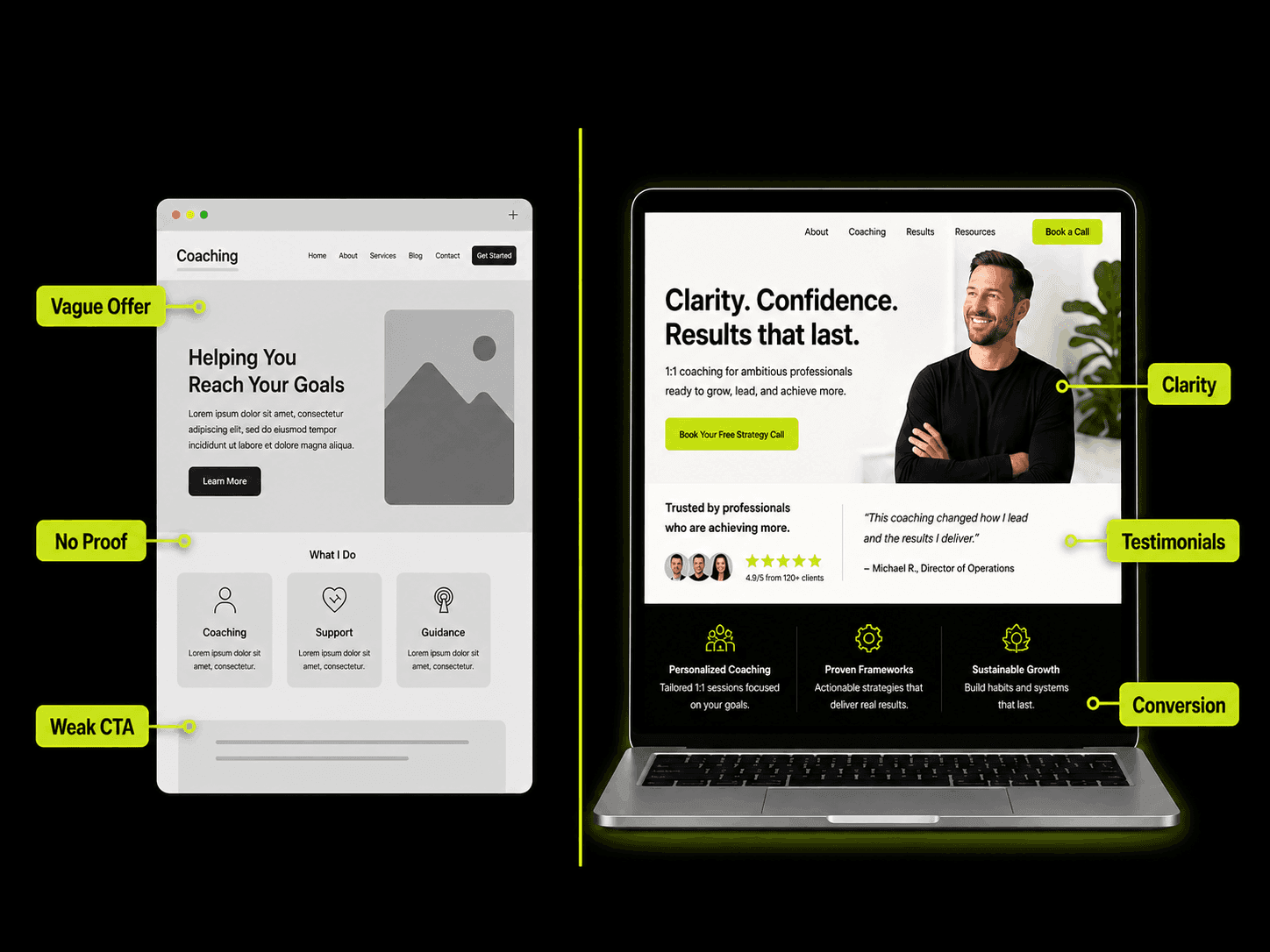
If your post is specific but your profile is vague, you lose momentum.
If your profile is strong but your website feels generic, you lose momentum.
If your website explains what you do but gives no clear next step, you lose momentum.
A good post creates interest. A clear path turns that interest into a real next step.
This is why your content, profile, website, and CTA need to work together.
Not as separate pieces.
As one connected journey.
If your website is not doing that yet, this guide on how a coaching website attracts clients explains the bigger website trust system.
Clarify Your Message Before You Push More Content
A lot of coaches are consistent.
But their message is still unclear.
They write about mindset.
Then productivity.
Then leadership.
Then burnout.
Then confidence.
Then personal growth.
All of those topics can be useful.
But if the audience cannot connect them to one clear offer, they may not know what you actually help with.
That is where confusion starts.
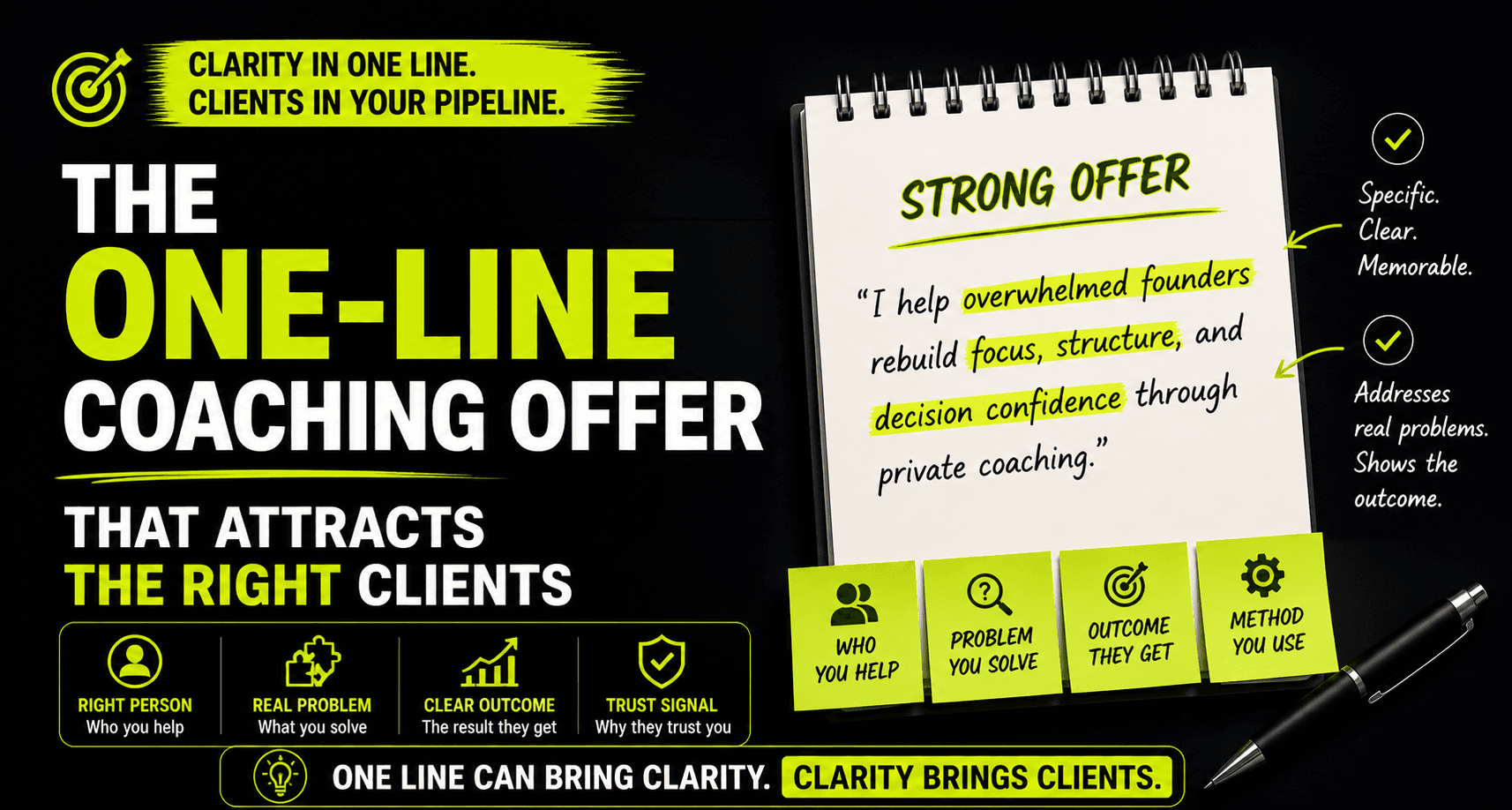
Your message should make it clear:
- Who you help
- What problem you focus on
- What result you help create
- What someone should do next
This does not mean every post needs to sell.
It means every post should live inside a clear positioning system.
For example, if you help overwhelmed founders rebuild focus and decision confidence, your content should keep pointing back to that world.
Different angles are fine.
Different lessons are fine.
Different stories are fine.
But the audience should still understand the bigger pattern.
If people enjoy your content but cannot explain what you help with, your message is still too loose.
Map the Journey From Post to Profile to Website
A strong conversion path does not need to be complicated.
It simply needs to be intentional.
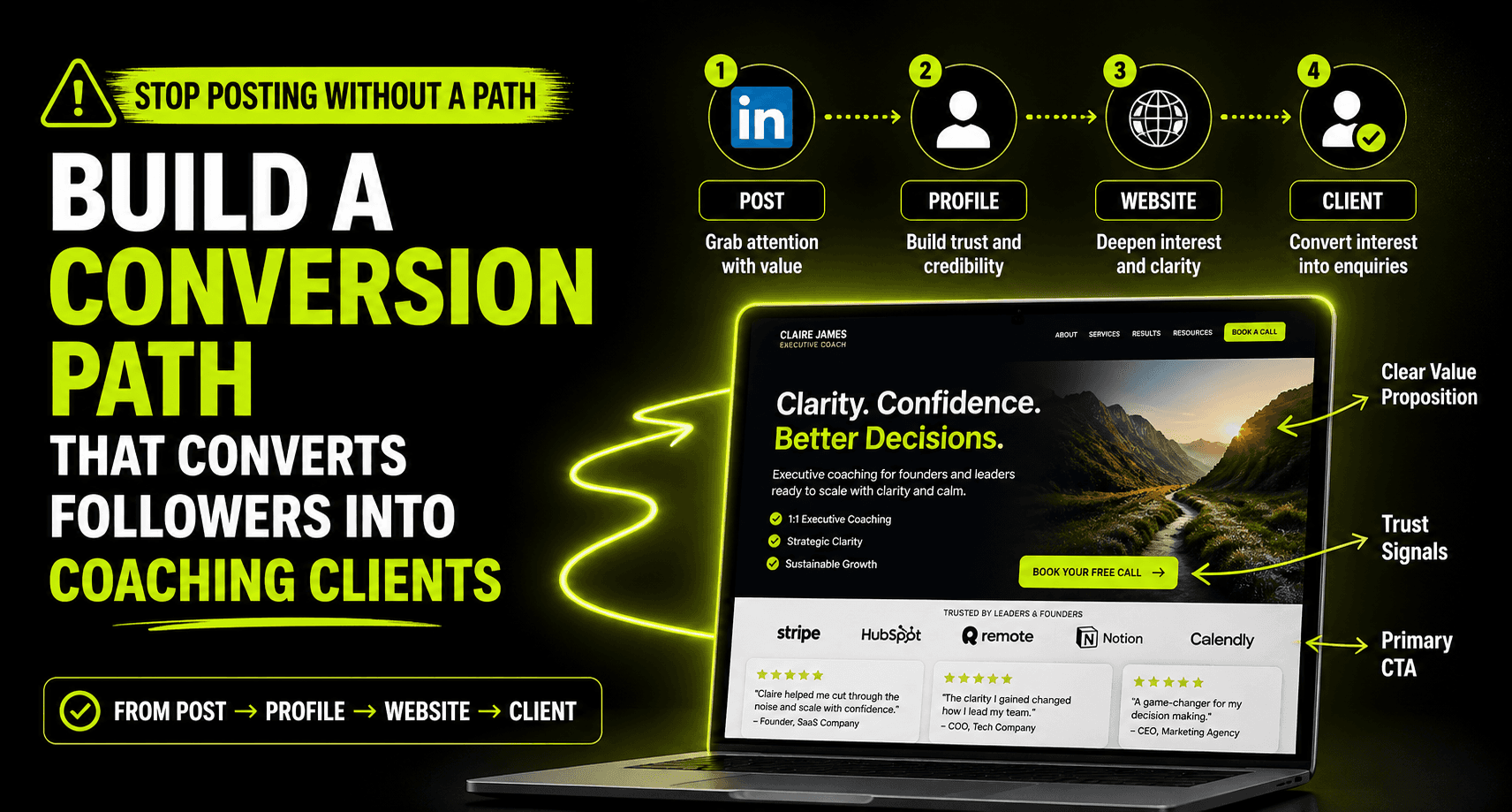
Here is the basic path:
- Post: Create relevance by speaking to one real problem.
- Profile: Confirm who you help and what outcome you support.
- Website: Build trust with clarity, proof, and a stronger explanation.
- CTA: Give the visitor one obvious next step.
- Follow-up: Continue the relationship after the click, booking, or download.
Each step should feel connected.
If your post talks about leadership burnout, your profile should not sound like a general life coaching bio.
If your profile talks about executive clarity, your website should not open with a vague “helping you become your best self” message.
If your website explains the problem well, the CTA should not disappear at the bottom of the page.
The promise should carry through.
That is what makes the path feel smooth.
If you want to improve the website side of that path, read this article on building a client-first coaching homepage.
Give People a Clear Next Step
Many coaches end their posts with soft CTAs.
Things like:
“Let me know your thoughts.”
“What do you think?”
“Follow for more.”
Those are not always wrong.
They can create engagement.
But they do not always create business movement.
If the goal is client enquiries, you need clearer next steps at the right moments.
For example:
- Book a discovery call
- Download the checklist
- Take the self-assessment
- Read the full guide
- Request a website audit
- Join the email list
The CTA should match the reader’s readiness.
Someone who trusts you already may be ready to book.
Someone who just discovered you may need a softer step.
Both paths matter.
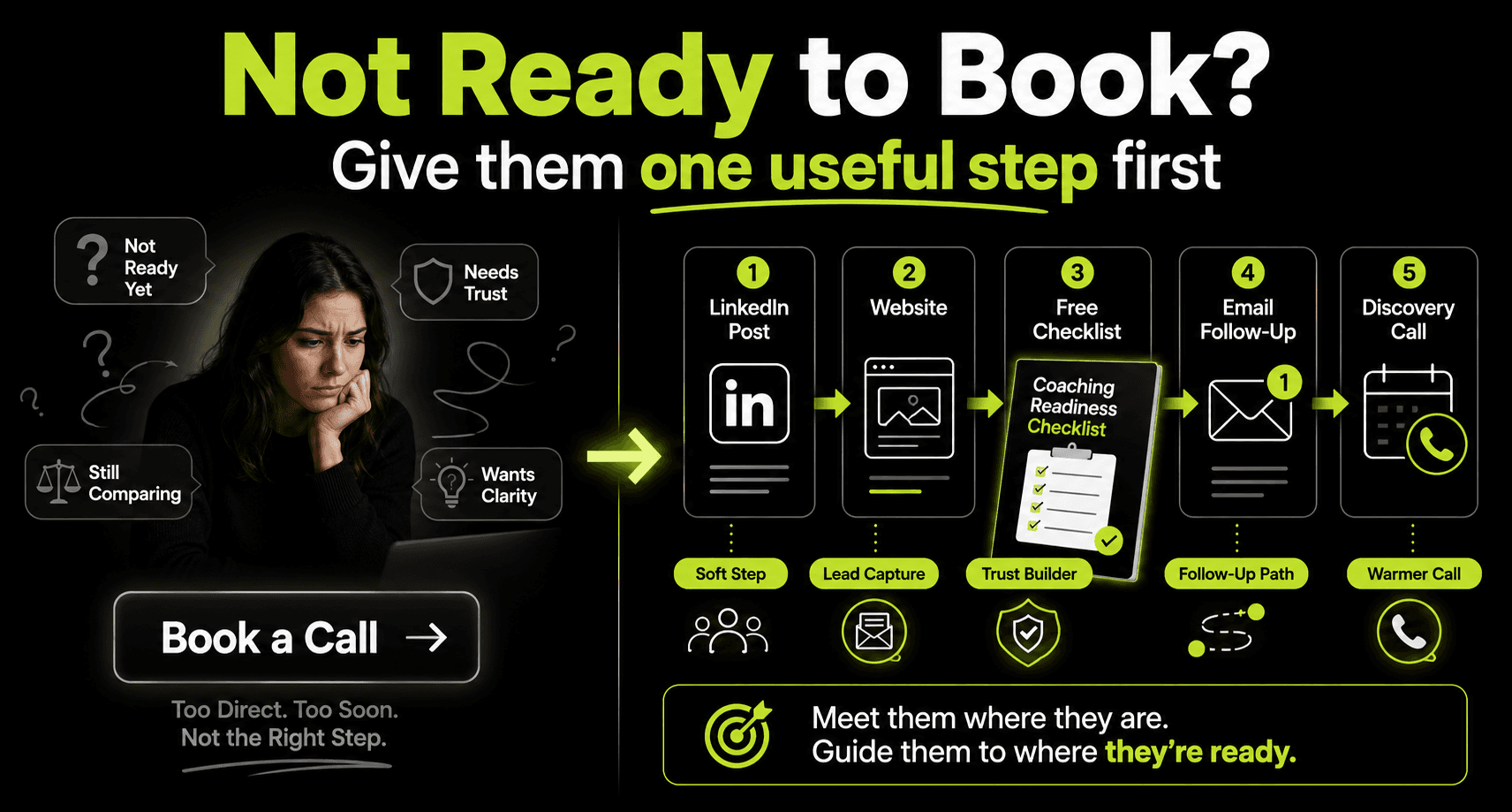
Not every visitor is ready to book. That does not mean they are not worth capturing.
Use a Lead Magnet for People Who Are Not Ready Yet
Most people will not book a call the first time they see your content.
That is normal.
They may need more trust.
They may need to understand your method.
They may need to see more proof.
They may need to compare options.
This is where a lead magnet helps.
A lead magnet is a smaller, lower-pressure step.
For coaches, it could be:
- A one-page checklist
- A short guide
- A private audio training
- A quiz
- A self-assessment
- A short email series
The purpose is not to dump more information on people.
The purpose is to help them take one useful step and stay connected to you.
Then your follow-up can build trust over time.
This is especially useful for coaches because many buyers need time before they are ready to talk.
A softer step keeps them in your world instead of losing them completely.
Simplify the Website Path
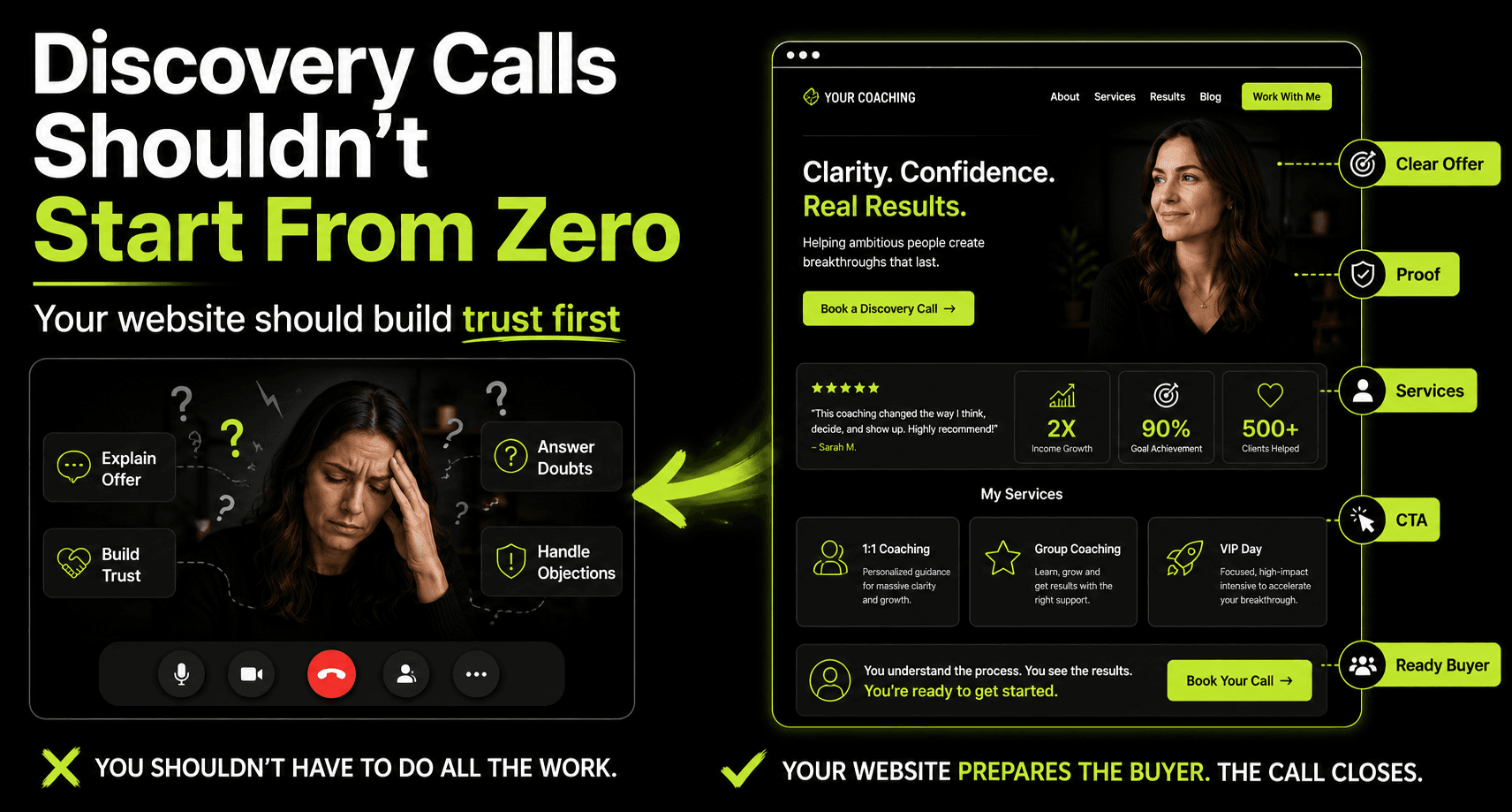
Your website should not make people hunt.
If someone comes from LinkedIn, they are usually looking for context.
They want to know:
- What do you actually do?
- Who is this for?
- Can I trust you?
- What happens next?
Do not give them ten different directions.
Do not bury the offer.
Do not hide the booking link.
Do not make every page feel like a general introduction.
Each page should have one job.
Your homepage should create clarity.
Your services page should explain the offer.
Your proof should reduce doubt.
Your CTA should move the visitor forward.
For more related resources, you can also browse the Coaching Business Growth category.
A Simple Conversion Path for Coaches
Here is a simple path you can build.
-
Write a post around one specific pain point.
For example, “posting more will not fix a broken client path.” -
Make your profile match that message.
Your headline should make it clear who you help and what problem you solve. -
Send people to a page that continues the same conversation.
Do not send a specific post to a generic homepage if the visitor needs a more focused page. -
Offer one primary CTA.
This could be booking a call, applying for coaching, or requesting an audit. -
Add one softer CTA.
This could be a checklist, guide, quiz, or email series. -
Follow up with useful content.
Do not let the relationship die after one click.
This is not complicated.
But it does need to be deliberate.
When every step supports the same message, your content starts doing more than creating attention.
It starts creating qualified movement.
Conclusion
Posting more will not fix a broken path.
If your content is getting attention but not enquiries, do not only look at the post.
Look at what happens after the post.
Check your profile.
Check your website.
Check your CTA.
Check your follow-up.
Because the real issue may not be your consistency.
It may be the journey.
Posting without a path creates attention. Posting with a path creates movement.
That is the difference.
To keep improving your website and content system, visit the 100XLift blog or start from the 100XLift homepage.
Sources
This article references research and insights from credible marketing sources. Read more in these articles:
- “Why your social media content isn’t converting” explains that social content often fails to convert because it lacks a clear goal, uses weak CTAs, and sends users to mismatched landing pages.
- “Getting traffic but no sales? It’s a brand messaging problem” explains how unclear messaging creates friction and makes buyers work too hard to understand the offer.
- “6 reasons your website isn’t converting leads” explains how unclear navigation, too many choices, and weak CTAs can reduce conversion.
- “3 reasons why your calls to action are not converting” explains why CTAs work as the bridge between content and the next step.