Coaching Discovery Calls Convert Better
How to Make Coaching Discovery Calls Convert Better
A discovery call should not be the first time a potential client understands what you do.
That is too much pressure for one call.
And it is one of the quiet reasons many coaching discovery calls do not convert.
The person books a call.
They show up interested.
But they are still unclear.
They do not fully understand your offer.
They are not sure who you work with.
They have not seen enough proof.
They still have basic questions your website should have already answered.
So the discovery call becomes heavy.
You spend half the conversation explaining.
The buyer spends half the conversation trying to understand.
And by the end, both sides feel like there is still too much uncertainty.
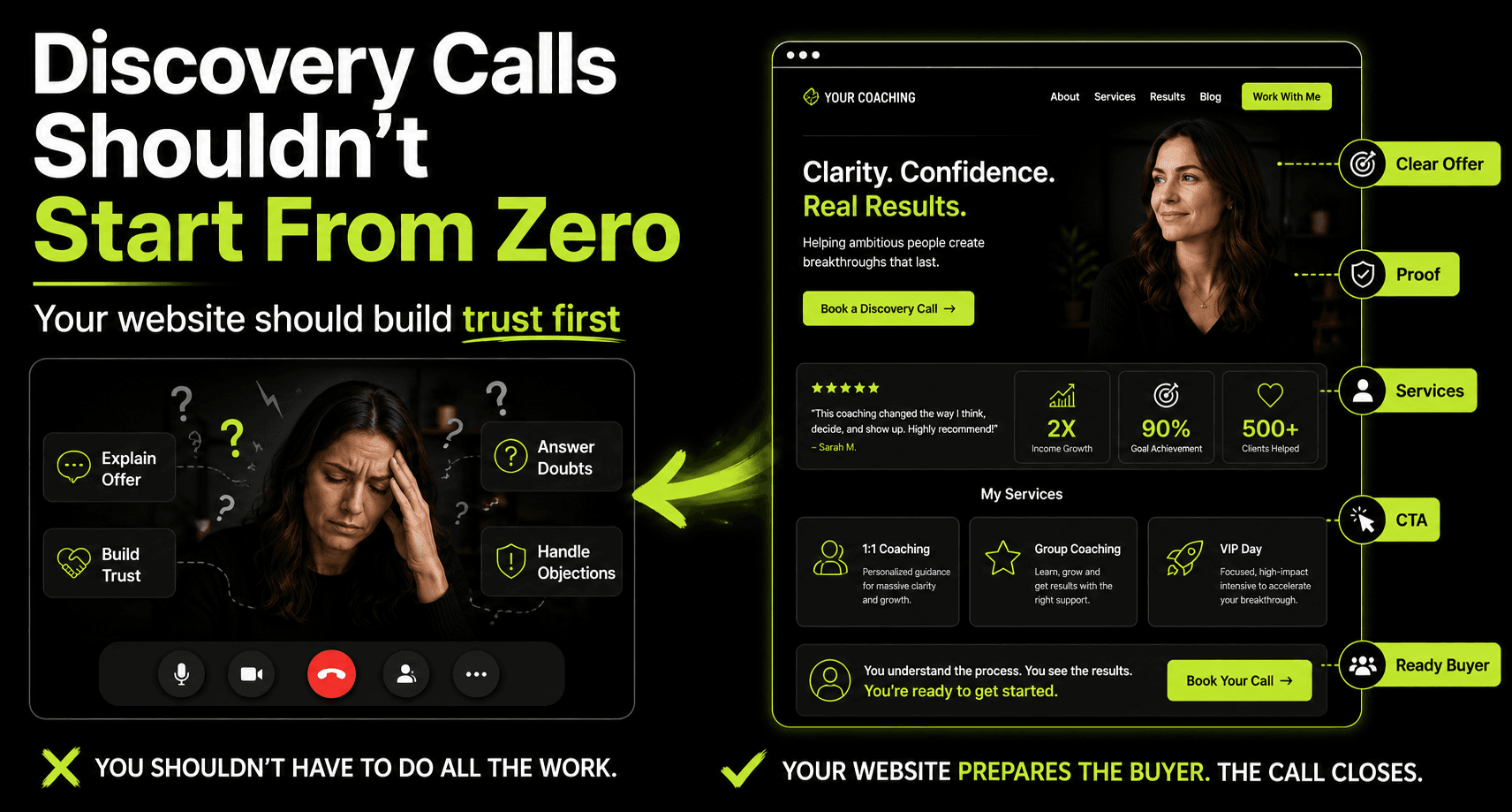
A discovery call converts better when your website has already done some of the trust-building.
That is the real point.
Your website should not replace the call.
It should prepare people for it.
Why Discovery Calls Feel Harder Than They Should
Many coaches treat discovery calls as the place where everything happens.
The offer gets explained there.
The process gets explained there.
The proof gets shared there.
The objections get handled there.
The buyer finally understands the work there.
That can work sometimes.
But it also creates friction.
Because the buyer arrives without enough context.
They may be curious, but not confident.
They may like your content, but not understand your method.
They may trust your personality, but not yet trust the offer.
So the call has to do too many jobs.
If the call has to create clarity, build trust, explain the offer, answer doubts, and close the decision, it is doing too much.
A better system spreads that work across the buyer journey.
Your content creates relevance.
Your profile confirms fit.
Your website builds trust.
Your discovery call checks alignment.
That is a much healthier path.
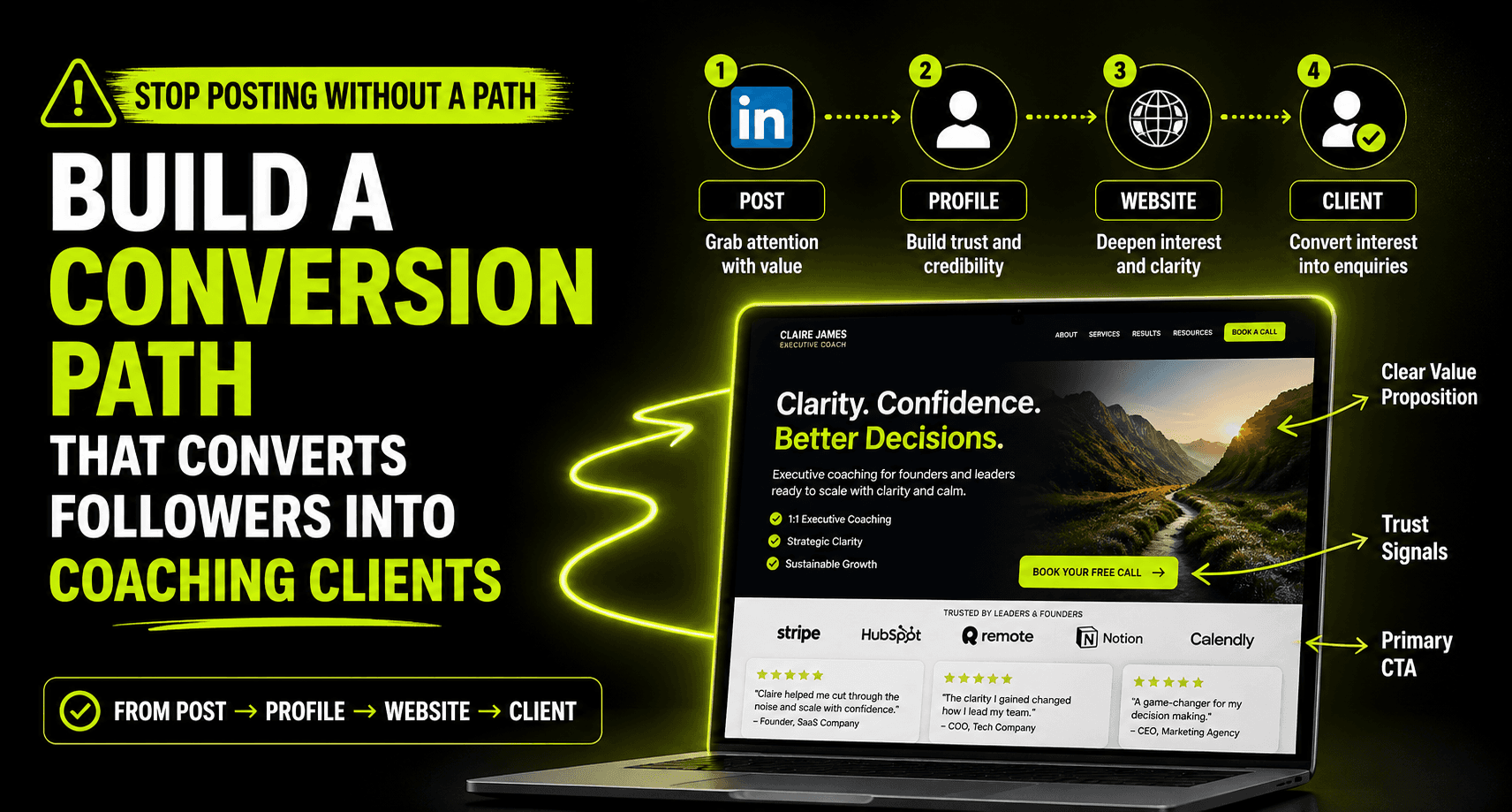
If you have not built that path yet, read this related guide on how a coaching website attracts clients.
Your Website Should Answer Basic Questions Before the Call
A potential client should not need a call just to understand the basics.
Before they book, your website should help them answer:
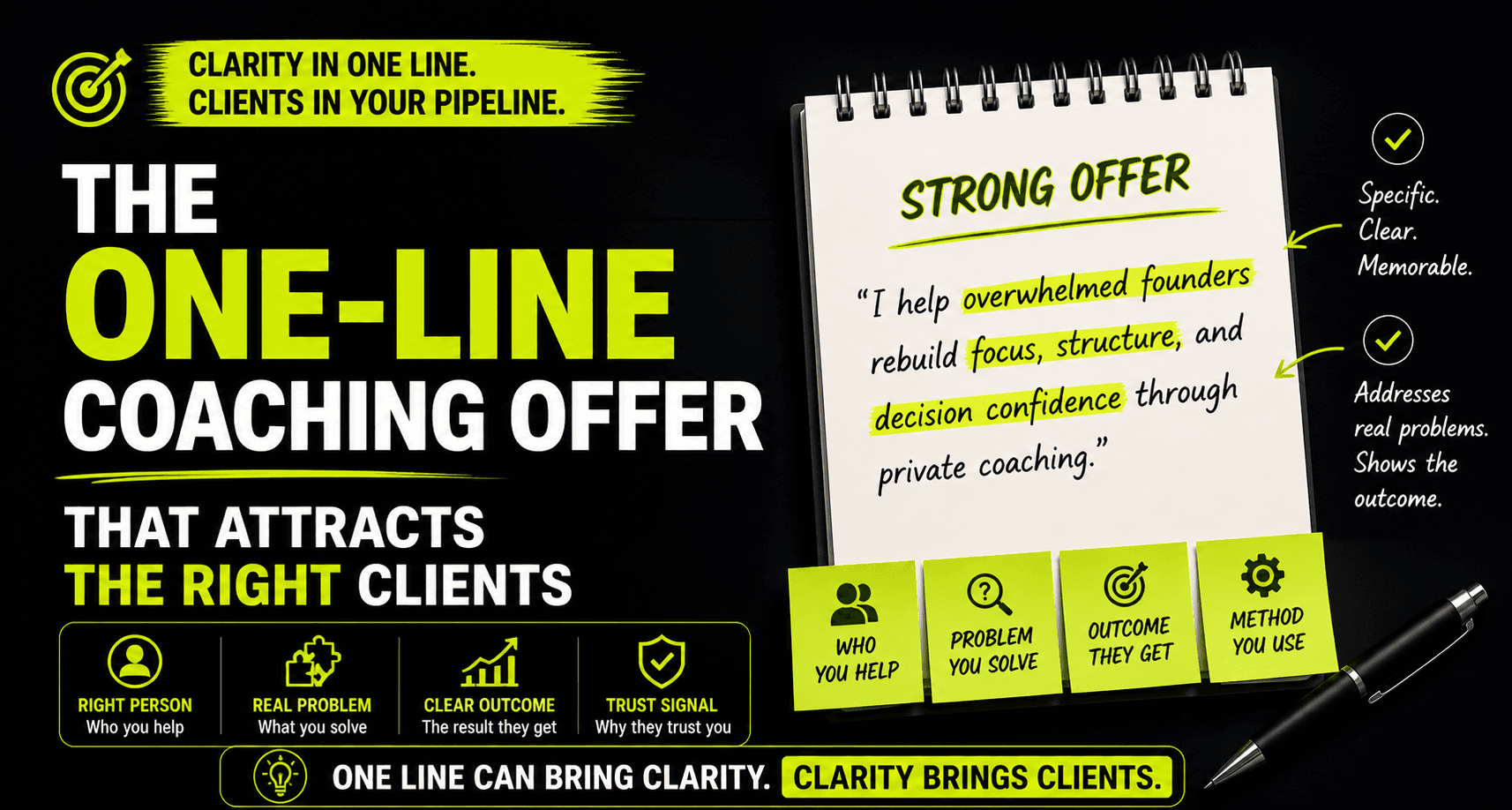
- Who do you help?
- What problem do you solve?
- What outcome can they expect?
- How does your coaching process work?
- What makes your approach different?
- What proof do you have?
- What happens after they book?
These are not small questions.
They are the questions that decide whether someone feels safe enough to move forward.
When your website ignores them, the call becomes harder.
When your website answers them clearly, the call becomes easier.
The person arrives with more confidence.
They already understand the shape of the work.
They already know whether the offer sounds relevant.
They are not starting from zero.
The best discovery calls do not start with “So, what exactly do you do?”
They start with a buyer who already understands enough to have a real conversation.
The Call Should Be About Fit, Not Basic Explanation
A strong discovery call should help both sides decide if the coaching relationship makes sense.
It should not feel like a rushed sales presentation.
It should not feel like a long FAQ session.
It should not feel like you are trying to prove your value from scratch.
The call should focus on fit.
Can you help this person?
Are they ready for the work?
Is the problem aligned with your offer?
Do they trust your process?
Is the timing right?
Are expectations realistic?
These are much better questions than spending the first 20 minutes explaining your services.
When your website does the early education, the discovery call becomes calmer.
More focused.
More honest.
More useful for both sides.
Your Homepage Should Prepare the Buyer
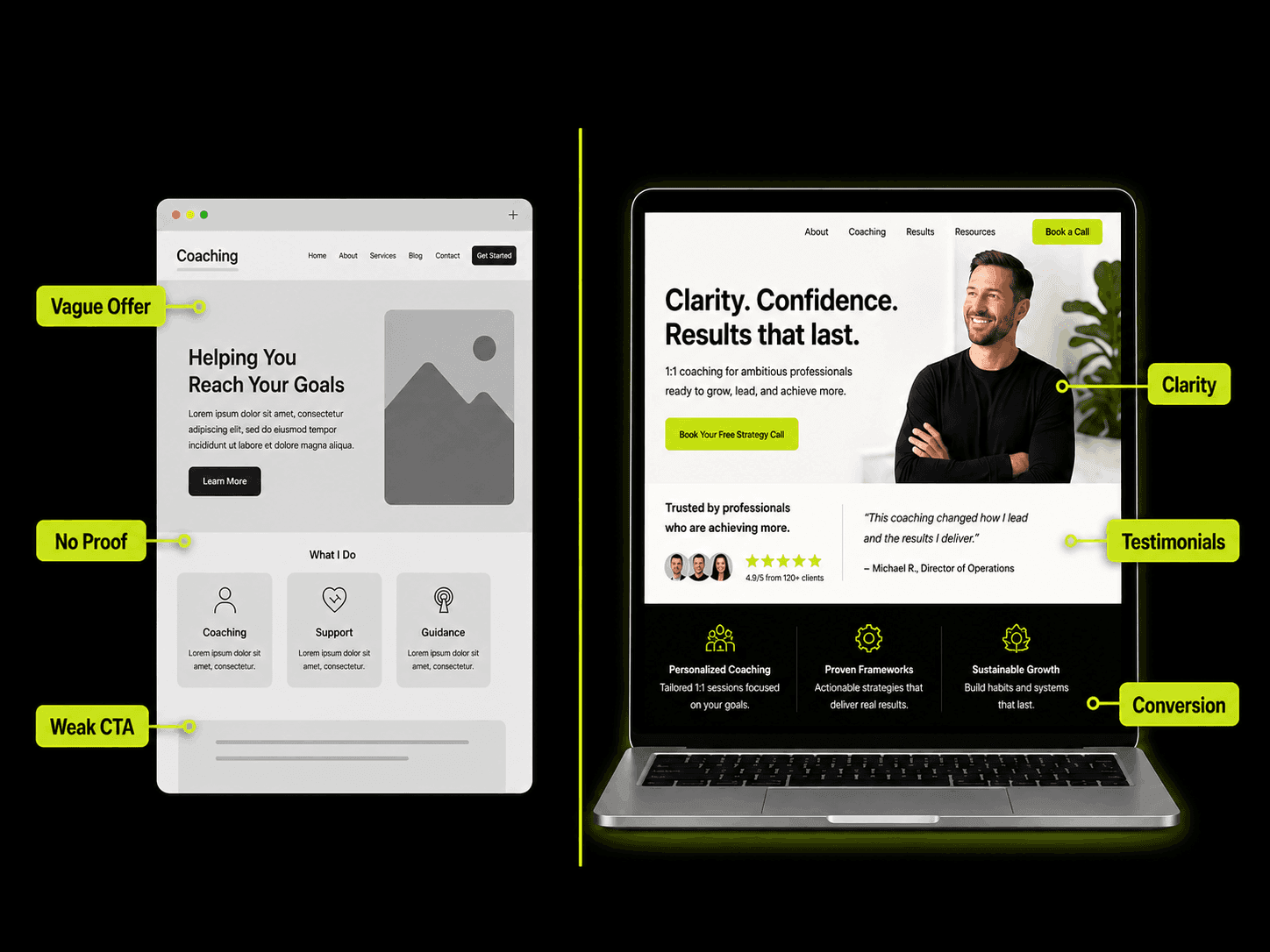
Your homepage is usually the first trust checkpoint.
If someone comes from LinkedIn, a referral, or a search result, your homepage needs to orient them quickly.
It should make clear:
- Who the coaching is for
- What problem you help with
- What result the person is moving toward
- Why your work is credible
- What step they should take next
This does not mean your homepage needs to be long or complicated.
It just needs to be clear.
The visitor should not have to guess whether they are in the right place.
If your homepage starts with a long biography, vague promise, or broad motivational language, you may lose people before they ever reach your booking button.
A client-first homepage can change that.
For a deeper breakdown, read Client-First Homepage for Coaches.
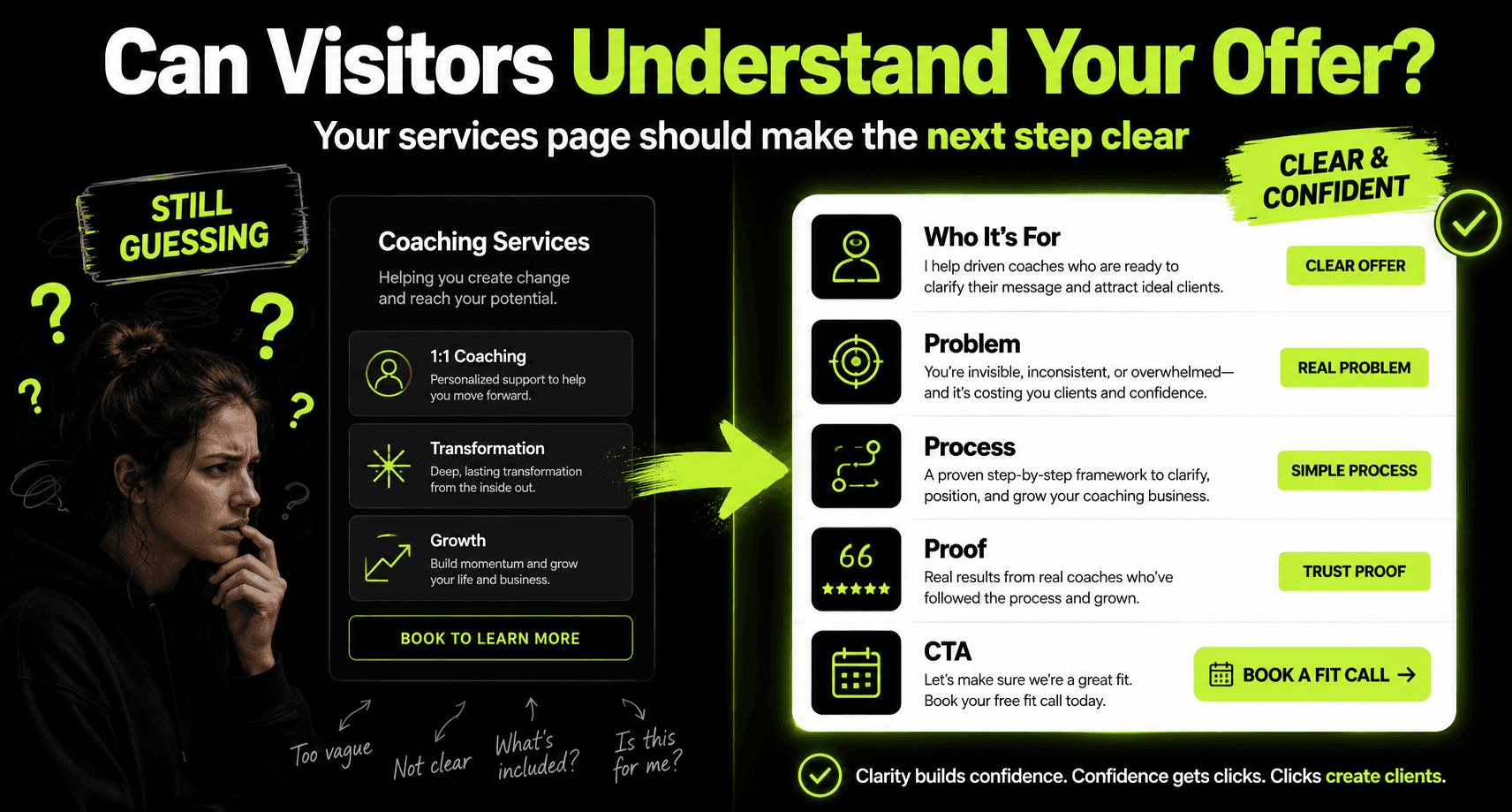
Your Services Page Should Reduce Uncertainty
Your services page should not simply say:
“Book a call to learn more.”
That is too thin.
People usually want more context before they speak to you.
They want to know what the coaching includes.
They want to know who it is best for.
They want to know what kind of problems you usually help with.
They want to know whether the process is structured or flexible.
They want to know what happens after they enquire.
Your services page should answer enough of this to reduce hesitation.
It does not need to reveal every detail.
But it should give the visitor enough confidence to book with context.
Vague services create vague calls. Clear services create better conversations.
Proof Should Be Visible Before the Call
Do not save all your proof for the discovery call.
Put some of it on the website.
Potential clients want to know that other people have trusted you before.
They want to know what kind of change your coaching supports.
They want to know whether your work has helped people in situations like theirs.
This proof can take different forms:
- Specific testimonials
- Short case studies
- Client outcomes
- Podcast features
- Credentials
- Before-and-after stories
- Relevant client language
The key is specificity.
A vague testimonial like this does not do much:
“Great coach. Highly recommend.”
A stronger testimonial gives context:
“Before coaching, I was constantly overwhelmed and avoiding hard decisions. After a few weeks, I had a clearer weekly structure and more confidence in how I led my team.”
That kind of proof helps the buyer recognise themselves.
It builds trust before the call starts.
Your CTA Should Set Expectations
A good call-to-action does more than say “Book now.”
It helps the visitor understand what will happen next.
Instead of a vague button like:
“Get Started”
Use something clearer:
- Book a discovery call
- Apply for private coaching
- Schedule a fit call
- Request a coaching consultation
- Take the coaching readiness check
The wording matters.
If the call is an application, say that.
If the call is a consultation, say that.
If it is a fit call, say that.
Do not make the visitor guess what they are booking.
Clear expectations reduce hesitation.
This is especially important for coaching because the first call can feel personal.
People want to know whether they are walking into a sales pitch, a genuine conversation, or a structured consultation.
Make it clear.
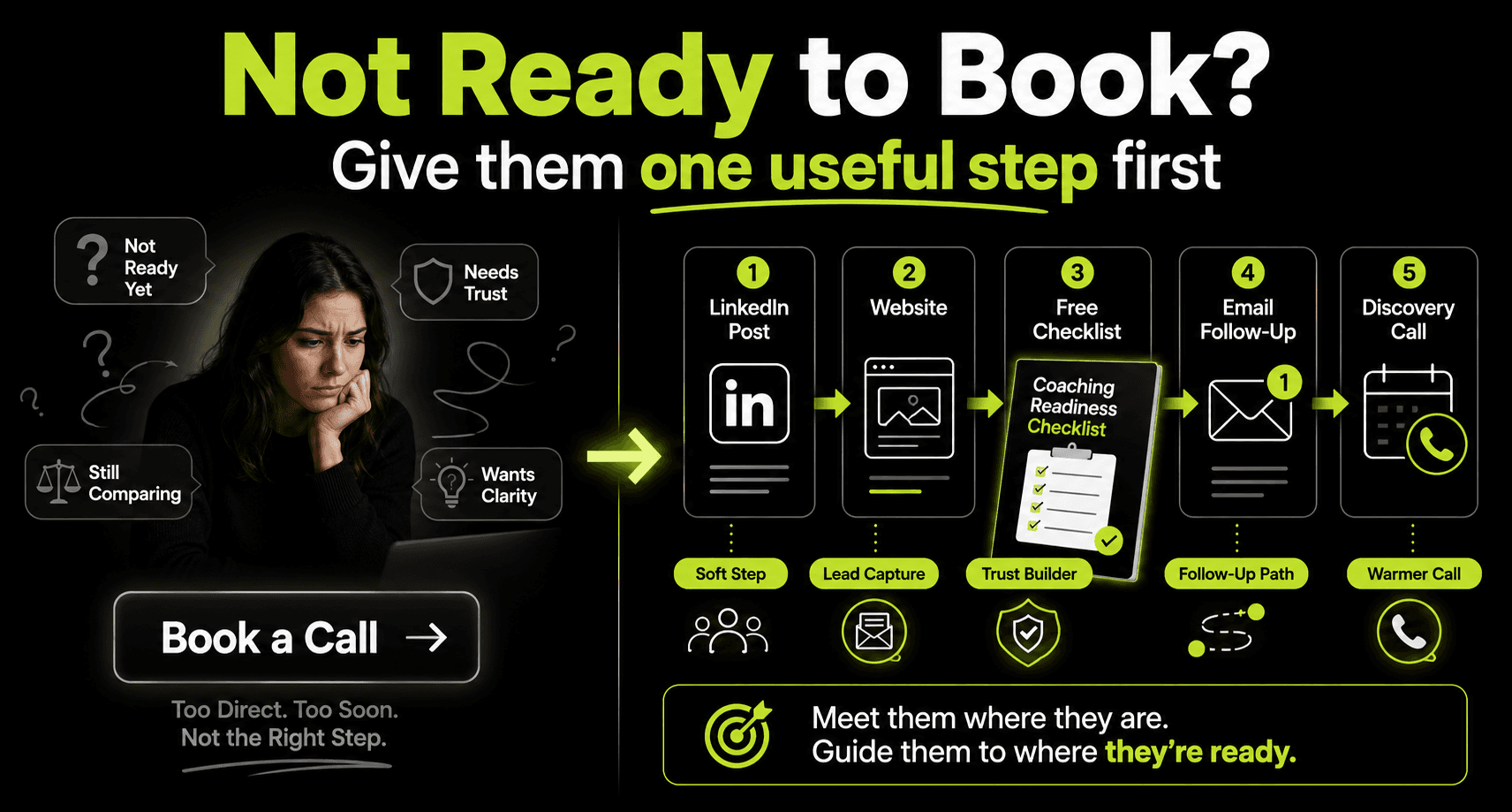
Use a Softer Step for People Who Are Not Ready
Not everyone who visits your website is ready to book a call.
That is normal.
Some people need more time.
Some are comparing options.
Some are still trying to understand their problem.
Some are interested, but not ready to talk.
If your only option is a discovery call, you may lose them.
Give them a softer step.
For example:
- A checklist
- A short guide
- A self-assessment
- A mini training
- A private email series
- A coaching readiness scorecard
This helps people stay connected until they are ready.
It also gives you a way to build trust after the first visit.
This connects closely with your broader content path.
If you are creating content but not getting enough enquiries, this guide on posting without a path explains why the journey after the post matters.
What a Better Discovery Call Path Looks Like
A stronger path might look like this:
-
LinkedIn post:
Speaks to a specific pain point your ideal client recognises. -
LinkedIn profile:
Confirms who you help and what outcome you support. -
Website homepage:
Explains your offer, shows proof, and makes the next step clear. -
Services page:
Gives more context about the coaching process and who it is for. -
Booking page:
Sets expectations for the call and removes unnecessary friction. -
Discovery call:
Focuses on fit, readiness, problem depth, and next steps.
This path is simple.
But it changes the energy of the call.
The buyer arrives more informed.
You spend less time explaining basics.
The conversation becomes more useful.
And the decision feels less forced.
A Quick Audit Before Your Next Discovery Call
Before you try to fix your call script, audit the journey before the call.
Ask yourself:
- Does my homepage clearly say who I help?
- Does my website explain the problem I solve?
- Can visitors understand my offer before booking?
- Is there proof visible before the call?
- Does my services page explain what happens in the process?
- Does my CTA tell people what they are booking?
- Do I have a softer step for people who are not ready yet?
- Does my LinkedIn content match the website message?
If several answers are no, the call may not be the real issue.
The pre-call journey may be weak.
Before rewriting your discovery call script, fix what the buyer sees before they book.
Conclusion
Discovery calls should not do all the work.
They should not be the first place a potential client understands your offer.
They should not carry every objection.
They should not be responsible for building trust from zero.
Your website should help before the call.
Your content should help before the call.
Your proof should help before the call.
Your CTA should help before the call.
When that happens, the discovery call becomes easier.
It becomes more focused.
It becomes more useful.
And it becomes more likely to turn into the right kind of client conversation.
The best discovery calls do not start from zero. They start after trust has already begun.
For more coaching website and conversion resources, explore the Coaching Business Growth category or visit the 100XLift blog.